
Asphalt Driveway Paving in Ypsilanti Starts Below the Surface
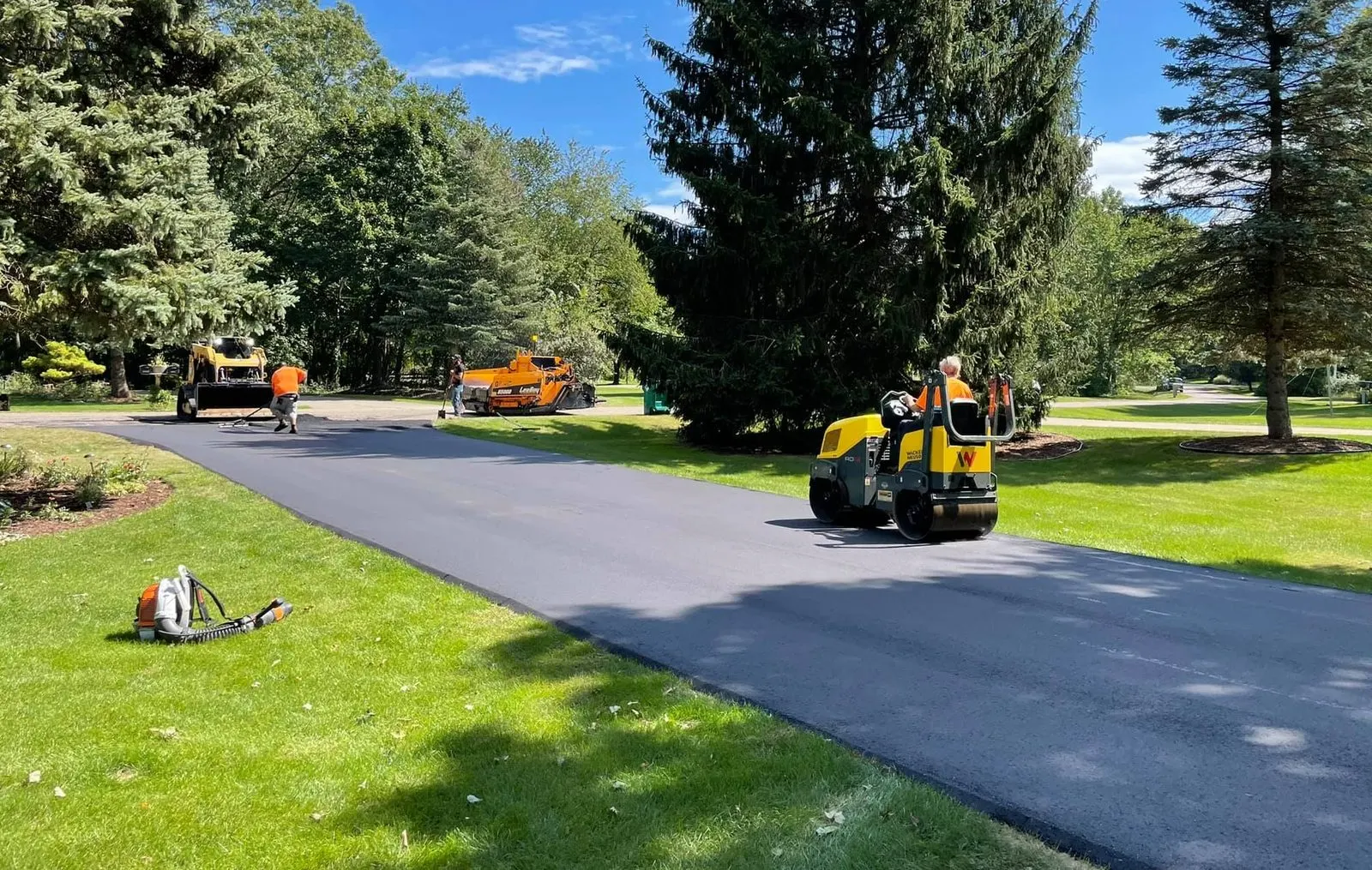
A good asphalt driveway in Ypsilanti, MI depends on two things you cannot see once the job is done: a firm, compacted base and a plan for where water goes. The asphalt on top is only as sound as the layers under it. Before you compare quotes for driveway paving, ask how the base will be built and how runoff will be handled on your lot.
What the base does under an asphalt driveway
The base is the compacted layer of stone that sits between the native ground and the asphalt. It spreads the weight of vehicles over a wider area and gives the surface a stable, even bed. Compacted means pressed down with heavy equipment until the stone locks together and stops settling.
When the support underneath is soft or uneven, the asphalt moves with it. You see that as ruts in the wheel paths, dips, alligator cracking (a web of small interlocking cracks) and edges that break away. Fresh asphalt over a weak base can look fine for a season and then start to fail.
Every site needs different preparation. Some lots need old pavement removed, some need soft spots dug out and refilled with stone, and some only need grading and compaction. A contractor who quotes without looking at the ground has not answered that question.
How drainage protects the driveway structure
Water is the main thing that breaks down a driveway from below. If it soaks into the base or the soil beneath, the support weakens, and in cold weather that water also freezes and expands. A driveway that sheds water quickly stays firmer and lasts longer.
That is why slope matters. A driveway needs enough pitch (a gentle grade, often just a slight crown or one-way fall) to carry water off the surface and away from the edges. Flat or low spots hold water, and water that sits on asphalt works its way into every small crack.
Signs of a drainage problem
- Puddles that remain on the surface a day or more after rain.
- Water running toward the driveway from a lawn, downspout or neighboring slope.
- Soft, damp or eroded ground along the edges.
- Dark staining or fine cracking in the same low area year after year.
The paving plan should account for the whole driveway and where the water will end up, not just the asphalt itself. Moving a drainage problem from one spot to another does not solve it.
Ypsilanti and Ann Arbor winter conditions
Southeast Michigan winters bring snow and repeated freeze-thaw cycles, usually from November into the colder months. Daytime melting followed by overnight freezing is hard on any paved surface. Water gets into a crack or a weak spot, freezes, expands and pushes the crack wider. The next thaw lets in more water.
For homeowners in Ypsilanti and Ann Arbor, that cycle is the reason base and drainage deserve attention before cold weather arrives. A sound base and a surface that sheds water give freeze-thaw less to work with. Conditions still vary lot by lot. If your yard is clay, water may drain slowly. If your drive climbs to the street or runs downhill toward the garage, runoff behaves very differently. Those are things to check on your own property rather than assume.
Spring thaw often exposes what winter did. March and April are common times to find new potholes, sunken patches and cracked edges on older driveways.
What to check before asphalt paving
Walk your driveway after a rain and again in dry weather. A few minutes of looking tells you a lot about what needs to be addressed before any new asphalt goes down.
| What you see | What it may point to | What to ask |
|---|---|---|
| Pooling water | Low spot or insufficient slope | How will the grade be corrected? |
| Crumbling edges | Weak edge support or water at the edge | How will the edges be supported? |
| Dips or ruts | Soft or settled base | Will bad areas be dug out and rebuilt? |
| Heaved or cracked transitions at the garage or street | Movement or water at the joint | How will the transitions be handled? |
Then ask the contractor three plain questions. How will the base be prepared on my lot? Where will runoff go once the new surface is down? Does the plan cover both support and drainage before work is scheduled? A clear answer to each tells you the crew has looked at the site and is not just planning to lay asphalt over whatever is there.
Paving over old asphalt or starting fresh
Sometimes an existing driveway has a base that is still solid and only the surface has worn out. In that case resurfacing may fit. If the base has failed, new asphalt over it will fail the same way. Our overview of asphalt paving explains how that choice gets made, and a site visit settles it.
Timing the work
Asphalt needs warm enough weather to be placed and compacted properly, so paving in Michigan generally runs from spring into fall. Waiting until late in the season leaves less room for delays, since a rainy week in October can push a job back. If your driveway has pooling water or soft spots now, getting it looked at before November gives the repair time to be scheduled.
We offer free estimates for driveway work in Ypsilanti, Ann Arbor and nearby Southeast Michigan towns. Ask us to look at your base and drainage when we walk the lot, and we will tell you what the site needs.
Common questions
Does an asphalt driveway need a stone base?
Yes. The compacted stone base carries the load and keeps the asphalt from shifting. How deep it needs to be depends on the soil, the traffic and what is already on the site.
Can you pave a driveway that holds water?
Not without addressing why it holds water. The grade or runoff path usually needs to be corrected first, or the new surface will pool and crack in the same place.
When is the best time for asphalt driveway paving in Michigan?
Most paving happens from spring into fall, when the weather is warm and dry enough for the asphalt to be placed and compacted. Cold or wet conditions can delay a job, so earlier scheduling gives you more room.
Areas we serve
Our services
Have a question about your project? Call (313) 209-7217